A single flow'r he sent me, since we met.
All tenderly his messenger he chose;
Deep-hearted, pure, with scented dew still wet--
One perfect rose.
I knew the language of the floweret;
"My fragile leaves," it said, "his heart enclose."
Love long has taken for his amulet
One perfect rose.
Why is it no one ever sent me yet
One perfect limousine, do you suppose?
Ah no, it's always just my luck to get
One perfect rose.
--"One Perfect Rose," Dorothy Parker

I took a deep breath outside the subway station at 42nd St. This was familiar territory. Bryant Park was one of my favorite places in the entire city, and I came here quite often on the weekends. The ice skating rink was up for the year, and there was a short line of people waiting to go in. All around the walkways, little booths had been set up for boutiques to sell their wares, and it looked a colorful holiday extravaganza.
But that wasn't my destination. I walked on a little bit reluctantly, but soon, I was carried away by the current of pedestrians, both native and tourist alike, down to 44 St. All along the way, I looked up at the skyscrapers around and wondered what The Algonquin would look like. Supposedly, it'd been there since 1902, but it'd undergone renovations multiple times since in order to still be around. However, the Theater District hotel has had a long-standing literary history, most famously for hosting the Round Table in the 1920's.


As I turned the corner of 6th and 44th, I spotted its brightly lit canopy immediately amongst the nightlights of midtown Manhattan. Walking up, I noticed that there were two doormen standing at the ready, waiting for either potential customers or returning ones. I walked up with some trepidation; what if they kicked me out for not having money or something? The thought was ridiculous, but I geared my self for rejection nonetheless.


Needless to say, I passed through without any problems. After a short talk with the man at the front desk, who I will call Mr. M for simplicity's sake, I was told that no one official was free to give me a historical tour of the place since I hadn't called ahead but that I was free to hang around the lobby and take some photos if I wanted to. He then handed me a postcard with a short history written on the back and guided me into the dining area, giving me some facts before he had to return to the desk.
"We have 174 rooms," he said in a light African lilt, voice full of pride for the hotel. "From the regular rooms to the suites. All operating."
A short conversation later, and he set me loose among the tables and armchairs in the front. I migrated towards the small cabinet at the side that contained memorabilia from the famous writers who were once patrons of the hotel. A shelf was decked with Dorothy Parker's picture and several of her books, as well as some small items that I assume were decorations of the hotel from her era.


I was surprised to see the image of a pretty young woman staring out at me, dark hair in a fashionable bob, mouth set in a vague smile. I'd always expected Parker to be an older woman with a pinched mouth and a hooked nose perhaps, sharp eyebrows raised perpetually in incredulity. Having read only her words, I couldn't quite imagine her as a youth.
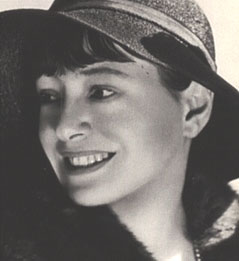 Parker, born in Long Branch, New Jersey in 1893, was an accomplished writer, poet, and critic who was famous for her quick, biting wit. After a tumultuous childhood, she began working at Vanity Fair at the age of 21, and her career took off shortly afterward in 1919, when she began writing theater reviews as a stand-in for P. G. Wodehouse. While there, she met Robert Benchley and Robert E. Sherwood. The three, along with some other friends, began lunching at the Algonquin, and the group became notorious for their lunchtime repartee and witticisms.
 Later in life, she became politically active in left-wing politics, which culminated in her being blacklisted by the Hollywood studios. This was unfortunate, as she had been writing very successful screenplays, several of which were nominated for Academy Awards.
She eventually returned to writing book reviews for New York magazines, but depression led to several suicide attempts, none of which succeeded. She died of a heart attack in 196, at the age of 73. To this day, she is still known for her cynical but hysterical quips and short verses.

The large, expansive lobby of the Algonquin, where she first started making her name, was an open area that doubled as a dining facility, but the centerpiece was undoubtedly a replica of the original Round Table where Parker and the rest of the Vicious Circle, as they were called, had lunch every day. Behind it hung a painting of the group, done by Natalie Ascencios, with the members looking appropriately sinister and snobby. Some of them looked like they could be cast as Disney villains any day now.


The rest of the hotel was lavishly and richly decorated, with colors that looked like they ought to clash but somehow didn't. Besides the table itself, seating consisted mostly of sofas and armchairs around low coffee tables. I sat down on one gingerly and flipped through the menu briefly, thinking I might get some tea so I wouldn't look so out of place just hanging out.
No go. The cheapest item was steak fries for $10 a plate.
I set the menu gingerly back where I'd gotten it.

The Oak Room, formerly the Pergola Room, was where the Round Table used to reside. Unfortunately, they seemed to be preparing for an event that evening, so I didn't bother the waiters.
I recalled reading somewhere that the Algonquin used to offer writer discounts, where as long as you could prove that you were working on a manuscript and claimed to have writer's block, they would let you stay the night for $20. This deal is no longer in effect, but I kind of wished it was… It would've been nice to take advantage of that.

Directions:
59 W 44th St.
New York, NY 10036
B, D, F, V trains to 42nd St./Bryant Park.
7 train to 5th Ave.
1, 2, 3 or N, R, Q, W or 7 or S trains to Times Square/42nd St.
A, C, E trains to 42nd St.
0 notes: